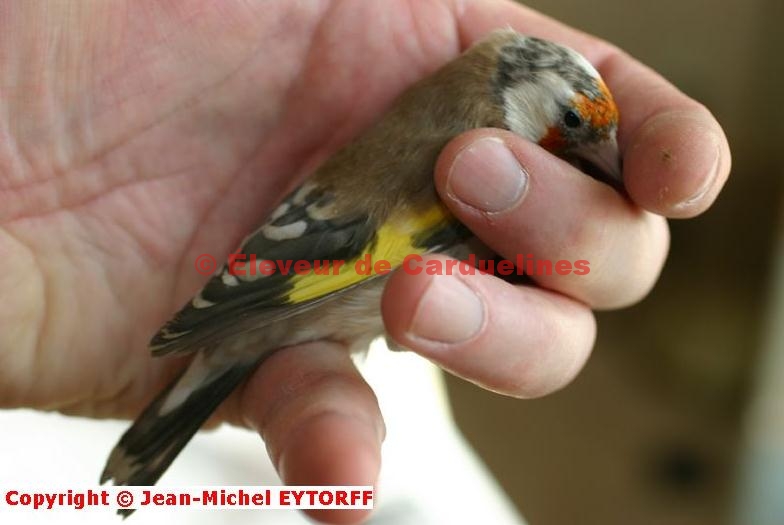
Elegant Goldfinch - Pastel
Description:
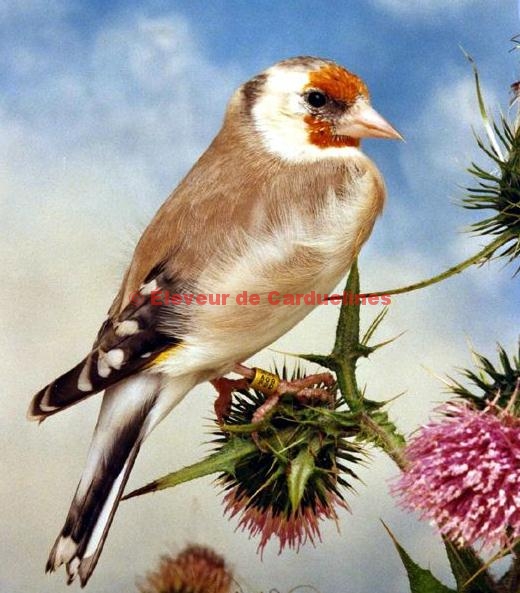
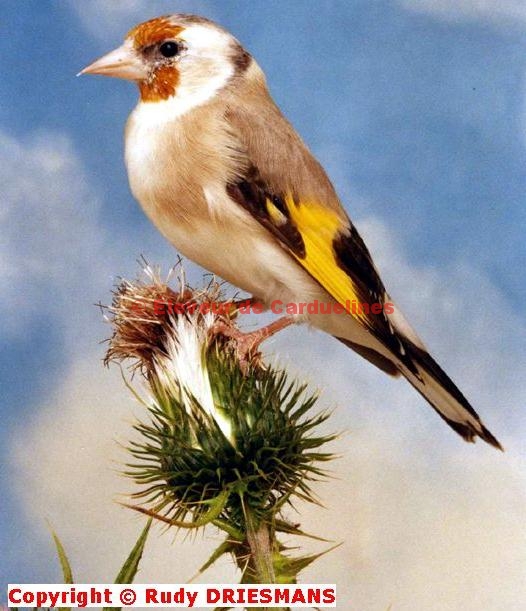
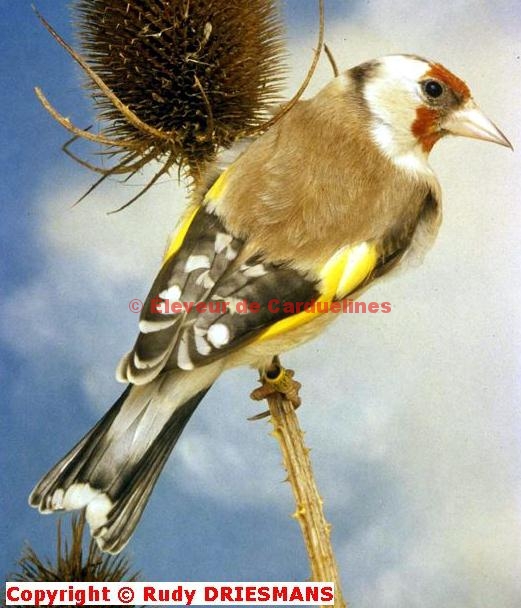
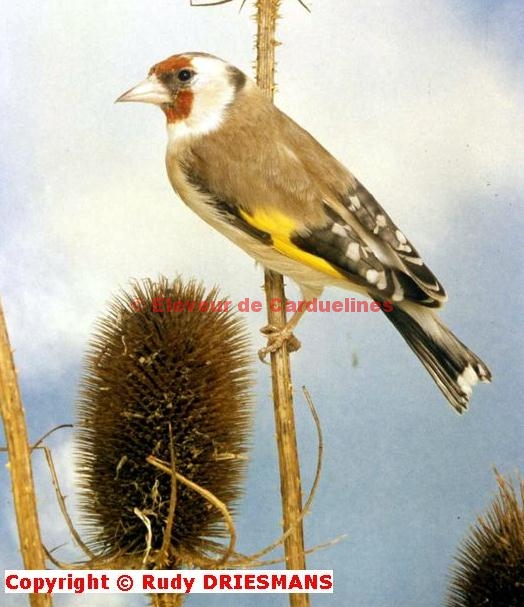
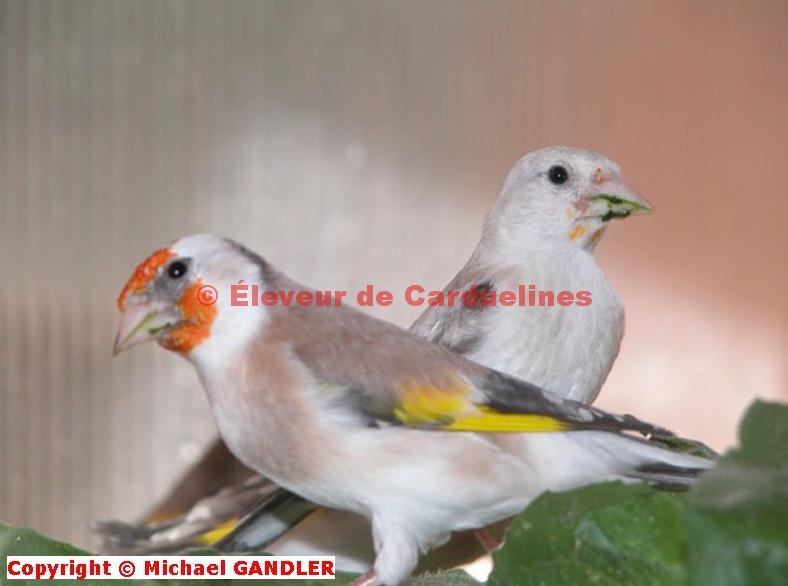
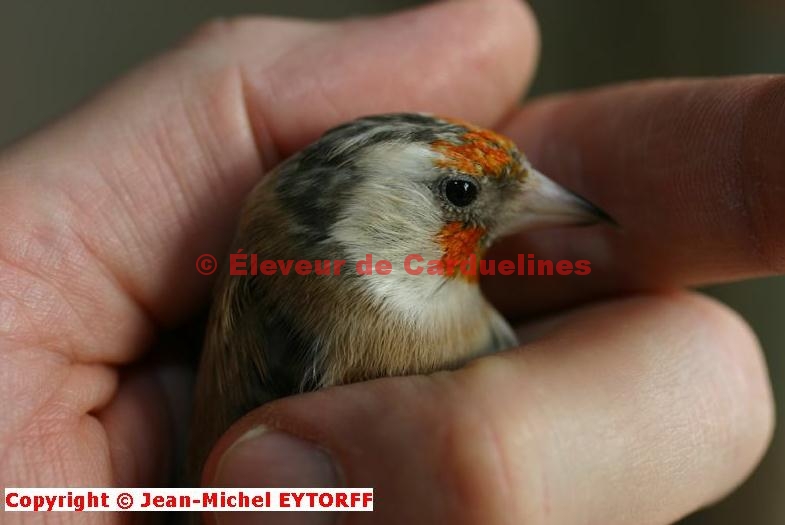
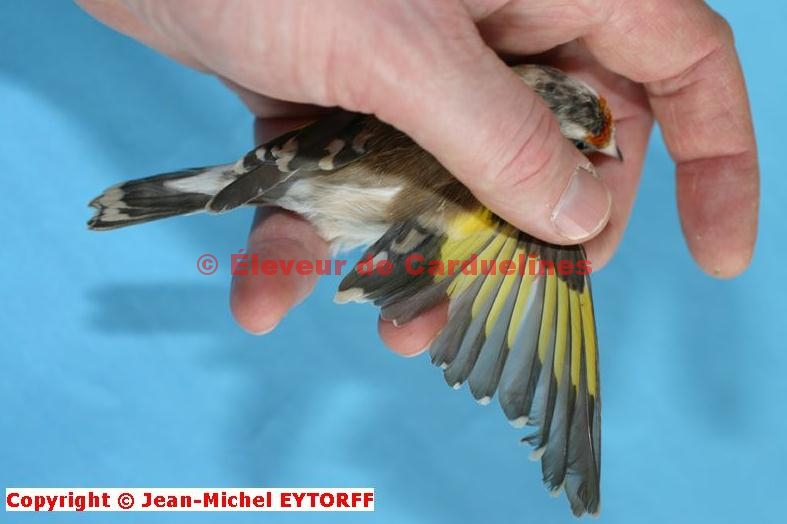
The Pastel mutation in the Goldfinch is sex-linked and recessive. The reduction in eumelanin and pheomelanin in the Goldfinch produces results just as striking as in the Bullfinch. The bird’s overall appearance is lighter. The contrasts between the different shades of plumage are softened. The breast appears whiter due to the very marked reduction in brown. The back has also turned greyish-brown. The flight feathers and tail feathers, which are usually black in birds with wild phenotypes, are greyish-black, more or less diluted depending on the individual. The black crown with brown markings has turned dark grey with brownish markings. The mask is also affected, and the black present in the wild form has turned grey. Curiously, the red mask has turned orange, accentuating its dilution.
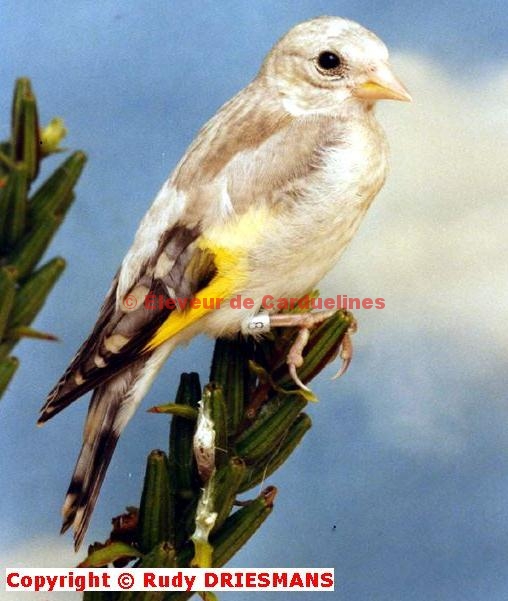
This phenomenon, previously observed in the Bullfinch, resembles the effect of the ‘ivory’ factor. In the nest, young Pastels can be identified immediately upon hatching. Their skin is much paler and their down is white rather than greyish-white. As the days go by, whilst the normally coloured young see their skin darken and their down turn grey, the young Pastels retain pale skin and white down. When the feathers appear, the bird’s dominant colour is greyish-white. Until moulting, immature Pastel finches are particularly spectacular and stunningly beautiful (see attached photo). The greyish-black flight feathers and tail feathers then contrast sharply with the rest of the greyish-white body, which features beige markings in places (back, breast, flanks). As adults, male Pastels have an orange mask that is slightly brighter than that of the females. As with the Bullfinch, variation in the expression of the ‘Pastel’ factor can be observed within a single brood, resulting in individuals that are more or less pale and rarely identical.
Gallery