Foot scabies (Dr Thierry DELESTRADE and Jean-Michel EYTORFF)
FOOT SCABIES.
Dr THIERRY DELESTRADE – JEAN-MICHEL EYTORFF
It is rare not to encounter a problem with foot scab at some point on your farm. A new arrival is very often the vector that leads to a slow but oh-so-embarrassing spread of the infection amongst the birds. In order to provide you with the most detailed information possible regarding the treatment of this external parasite, I asked my friend, Dr Thierry DELESTRADE, founder of ORNIPHARMA Laboratories and a consultant for our website, to kindly write the article published below. For my part, I have taken a few photographs to illustrate this document, at each stage of the treatment, taking care to follow the recommended treatment protocol. The prices of the products used are indicative, to help you estimate the financial outlay required to treat your bird effectively.
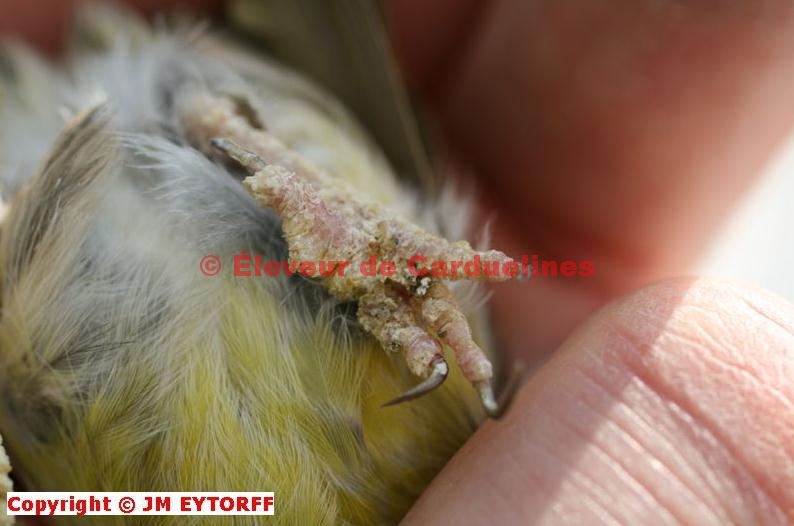
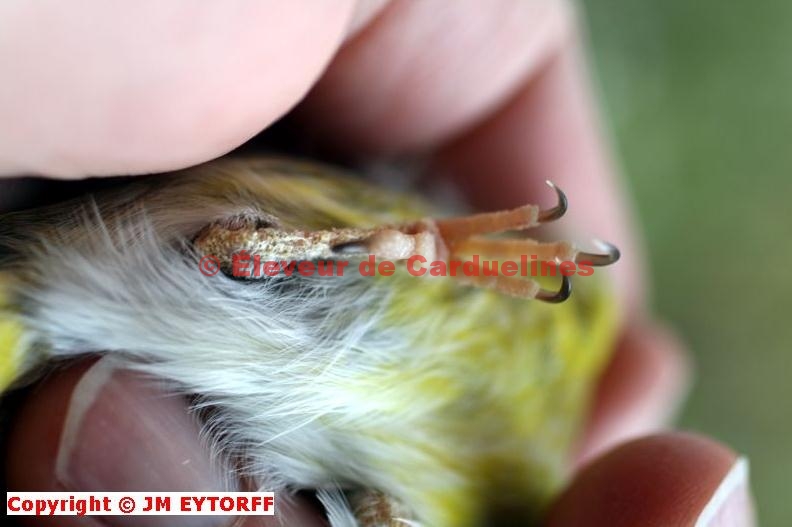
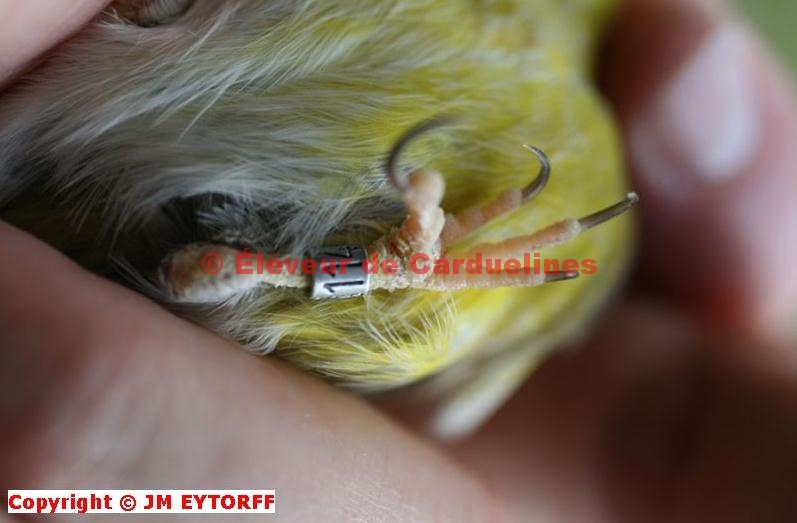
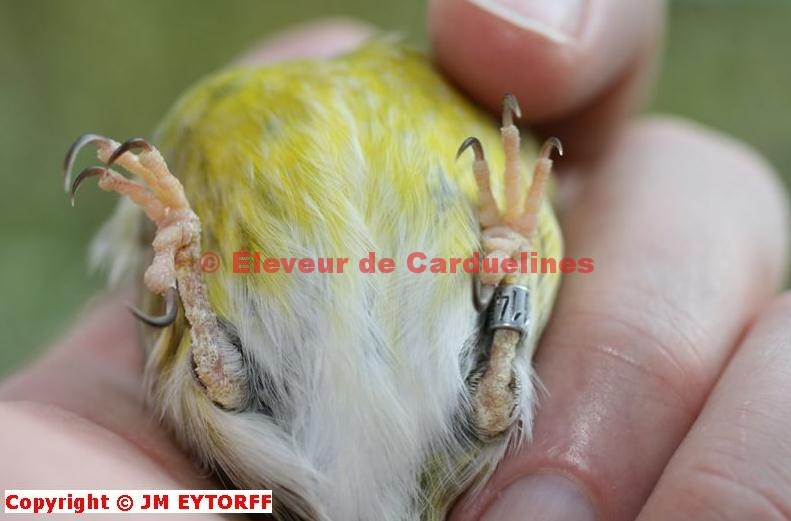
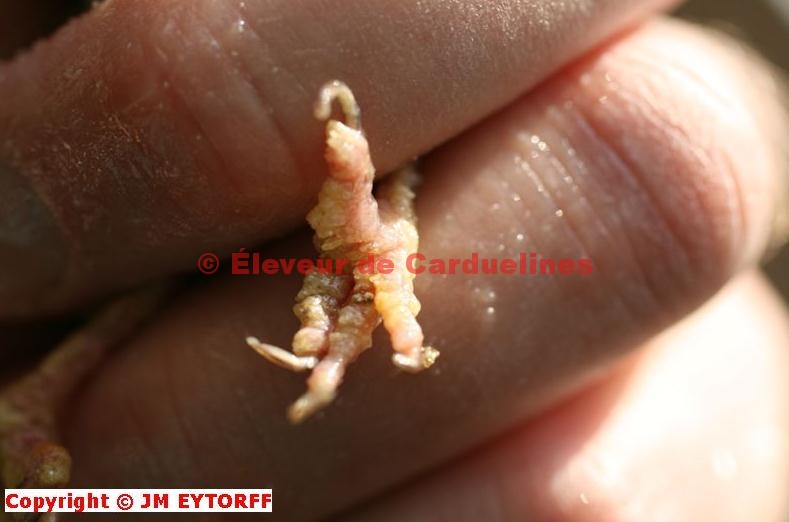
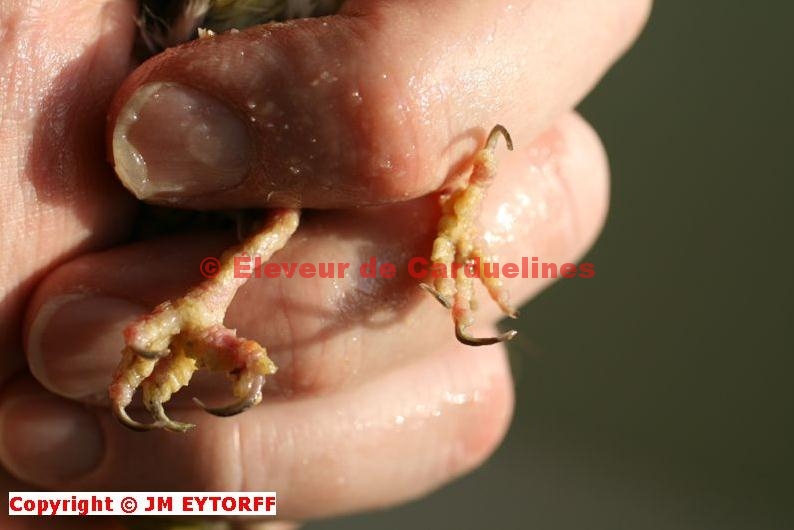
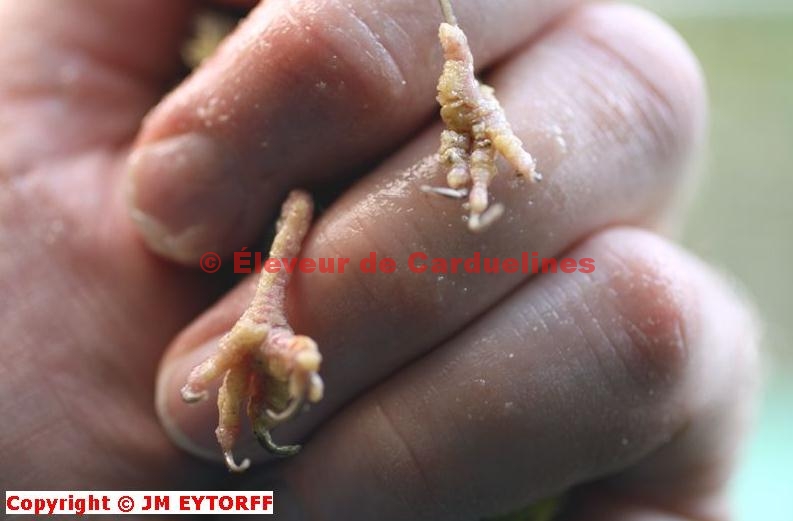
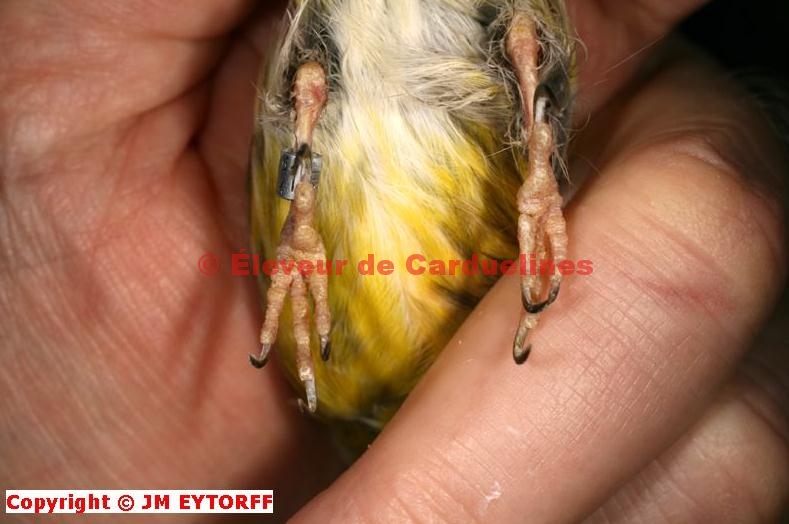
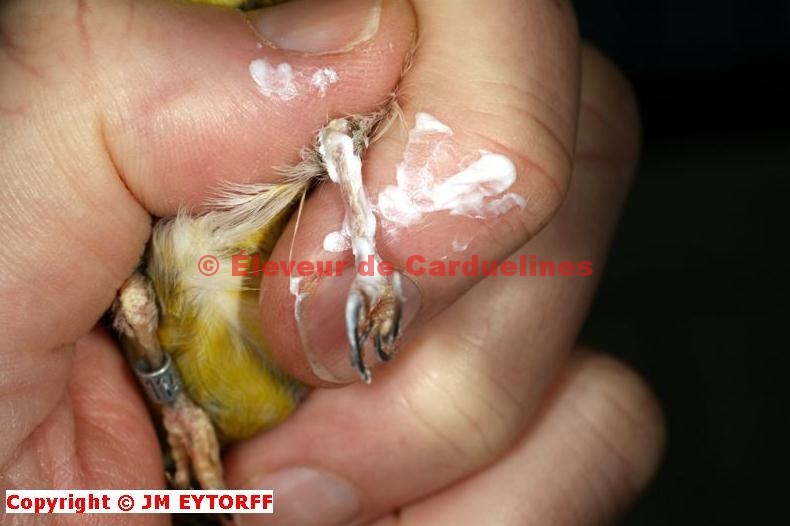
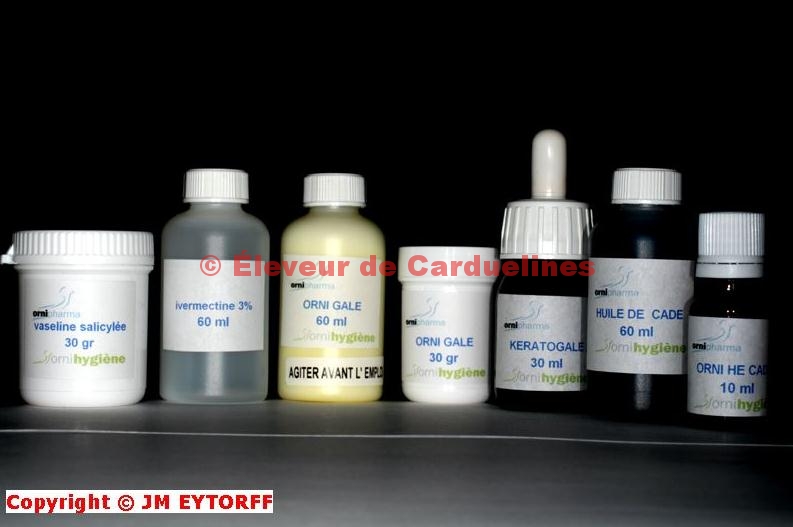
I have personally tested these products and observed a rapid recovery in infected birds. The photographs I have taken show the damage caused by scabies at various stages, as well as the successive treatments: salicylic vaseline and Orni Gale ointment.
For further information, you can also contact Dr DELESTRADE at the following address:
http://www.ornipharma.com
thierrydelestrade@ornipharma.com
Jean-Michel EYTORFF
1 / REMINDERS
Scabies is a contagious ectoparasitic condition caused by a blood-feeding, microscopic (less than 0.5 mm) mite:
‘the scabies mite’ (Cnemidocoptes).
This dermatosis affects only the bird’s bare (unfeathered) skin.
As it is therefore confined exclusively to the bird’s legs, it causes characteristic lesions in the form of horny growths (raised scales) which deform the leg. Yellowish-white scabs form, sometimes described as having the appearance of ‘dried breadcrumbs’.
The male lives on the surface of the skin, whilst the female burrows tunnels into the superficial horny layers of the epidermis to lay her eggs.
The salivary secretions are highly irritating (in humans, they cause severe, characteristic itching).
It is difficult to assess the discomfort this causes in birds, but affected birds do not appear to ‘scratch’ themselves particularly.
It is thought that the highly keratinised nature of the feet makes them less sensitive, thus sparing the affected birds this discomfort.
However, the deformities eventually disable the bird, which can no longer put weight on its foot; over time, the foot becomes so fragile that it can become infected, resulting in the loss of a phalanx, a fracture, or even a secondary infection (caused by staphylococci or streptococci) which is fatal to the bird without antibiotic treatment.
The parasite’s life cycle lasts three weeks. The eggs hatch within a few days and sexual maturity is reached in less than two weeks.
The disease progresses very slowly, developing over several months.
The outer dorsal surface of the toes is the first to be affected, after which the infection spreads to the inner plantar surface of the foot.
Differential diagnosis:
In very old birds, the legs may thicken and the scales may lift, similar to the changes seen in scabies.
These changes to the scales should not be confused with scabies.
However, if there is significant doubt, it is better to treat the bird as a precaution, as a bird’s age does not protect it from this condition.
Transmission:
Close contact with an infected bird facilitates transmission, which is all the more likely if the cage bars and bedding are dirty.
The short reproductive cycle leads to a significant increase in the number of parasites present on the skin’s surface. Consequently, transmission occurs all the more easily.
There is no cross-species transmission between humans and birds, as the Sarcoptes mites responsible for animal scabies do not survive in humans.
Unlike human scabies, avian scabies does not appear to be highly contagious; however, failure to treat the condition, poor hygiene and overcrowding greatly facilitate its transmission.
This parasite triggers a significant immune response; birds that recover are more resistant to re-infestation, though they are not completely immune.
The disease appears to be more active during cold spells, and its prevalence is increased by rearing birds in aviaries with earthen floors.
2/ HYGIENE PROTOCOL
Hygiene and disinfection measures are absolutely essential in the treatment of scabies.
Hygiene is not merely recommended; it is absolutely essential.
Naturally, the first step is to isolate the affected bird for the duration of the treatment.
It is imperative to treat the environment previously occupied by the affected bird to eliminate the mites.
A ‘light’ preventive treatment for its ‘cage mates’ will also be necessary, even if they show no clinical signs.
In fact, such signs only appear several weeks after infection.
In this case, for practical reasons, a single application of the treatment solution to the cage-mates is recommended.
As regards pest control, it is obviously essential not to omit this procedure in the isolation cage once treatment has been completed.
If possible, when reintroducing the bird that has completed treatment into a new cage, apply a final dose of the solution.
This is to ensure that it does not carry any sarcoptic mites, some of which may still be present in the treatment cage prior to its disinfection.
Mites can survive for a maximum of 1 to 2 days away from the bird.
Subsequently, as a preventative measure – just as with other higher mites such as lice – the premises and equipment must be regularly treated for pests. Twice a year, as part of disinfection protocols, appears to be a sufficient frequency. It is worth noting, incidentally, that pest control is, in any case, an integral part of any proper disinfection process.
As part of cleaning procedures – and therefore hygiene maintenance – particularly if you have cases of scabies, it is logical to pay special attention to the cleanliness of the bars (an ideal medium for the transmission of the parasite).
Finally, preventative treatment involving a single application of the solution will once again be one of the many essential measures to be taken during the quarantine period for ‘new arrivals’ at your farm.
In this regard, carbaryl baths, which are recommended for the elimination of lice, will also be highly effective in preventing the spread of the parasite.
Unfortunately, due to its location within the skin, the sarcoptic mite will resist standard hygiene measures such as bathing and cleaning the feet, even with a disinfectant soap.
Carbaryl baths, whilst effective against lice, will therefore only serve to limit the spread of scabies. They will be suitable for protecting the other birds in the flock, particularly those that were previously in contact with the affected bird.
3/ TREATMENT PROTOCOL
As always, the consequences – and therefore the symptoms – of this parasitic condition can be alleviated using certain standard products, but your real aim must be to eradicate the problem.
Vaseline, hitherto regarded as the ‘cure-all’, is now well and truly outdated in this regard...
To truly resolve the problem, only hygiene measures combined with a combination of symptomatic and curative treatments will be effective.
Keratoregulators (salicylic vaseline and anti-dandruff foaming soaps) will effectively cleanse the paw and quickly restore it to a more presentable appearance by removing the ‘scabs’.
It would, however, be illusory to believe that the battle ends there, for if no purely curative product is used, a relapse will be inevitable, despite the best hygiene measures, which will merely delay the inevitable.
Worse still, the spread will continue.
The step of exfoliating the cornified epidermis is essential as it makes the parasite more accessible to treatment.
Whilst treatment solutions and carbaryl baths appear to be more suitable for prevention and limiting the spread, the treatment of paws showing advanced infestation with significant scaly growths requires preparation using specific salicylic acid-based products, whose ‘exfoliating’ action, as we have already mentioned, will increase the effectiveness of the treatment.
Procedure:
Step one: preparing the paws.
Start by massaging in some salicylic vaseline.
This has the property of softening the scales.
The ointment form allows for better penetration than the liquid form.
Salicylic acid and its ‘exfoliating’ properties will, in turn, further soften the scabs by effectively eroding these growths.
Wipe off any excess ointment once you have finished massaging the paws.
Then, after leaving it on for 24 hours, brush the area thoroughly and gently with a toothbrush, using warm water and KERATOGALE* foaming liquid soap, which also contains salicylic acid as well as cade oil.
Repeat this brushing every other day, alternating with the salicylic Vaseline massage, for one to two weeks.
A marked improvement in the condition of the paw should be evident at this stage.
The more marked the improvement, the more effective the treatment will be.
It is therefore advisable to continue this phase not until the scales have completely disappeared, but at least until they have significantly reduced.
NB: during brushing, and particularly when repeating the process in severe cases, large pieces of scales may come away from the paw. It is therefore essential, at this point, to exercise ‘extreme’ care. Do not expect to remove all of these flaky patches in one or two go, as this risks damaging the paw.
KERATOGALE*: 5.90 for 30ml (2 or 3 drops per brushing)
Step two: applying a treatment.
The legs have been prepared for effective treatment.
You now have a ‘choice of weapons’:
- 5% carbaryl powder: dilute 1 level teaspoon (5 g) in 1 teaspoon of water (5 ml).
Apply this 2.5% solution generously to the paws twice a week.
For baths, dilute ½ teaspoon per litre.
ORNI CARBARYL * (6.90 for a 150 g 5 per cent powder container and 12.90 for 500 g)
Note for comparison: OCEGALE* is often recommended: 2% carbaryl, costing at least 7.00 for a bottle of just 15 ml.
The powder also allows for subsequent preventive treatment against lice:
Spraying cages, baths, dusting nests, etc…
This is undoubtedly the most economical method, though less potent than other chemical products.
It should also be noted that certain strains of Sarcoptes mites are resistant to carbaryl.
Nevertheless, it remains the first-line treatment to be used.
Its numerous uses, including as an oral solution (same dilution as for baths) against respiratory mites, mean that this product will certainly not go to waste.
- Treatment ointment: ORNI GALE ointment* crotamiton 5% 6.90ˆ per 20 g.
Presumably the most effective method, but it requires massaging in…
- Benzyl benzoate treatment solution: ORNI GALE liquid* benzyl benzoate 6 per cent. 6.90ˆ per 10 ml.
Very effective; it is best suited to those who do not wish to act as ‘physiotherapists’ and for cases that are not too severe and/or too numerous.
- Cade tar oil: twice a week. Although economical, it is less effective than ‘chemical’ treatments.
(Available on request from ORNI PHARMA).
- Cade essential oil: ORNI HE GALE*: 11.90 per 10 ml; used at a rate of one to two drops per application, it remains competitive in terms of the overall cost of treatment.
- Pyrethrin: reputed to be effective against parasites and insects of all kinds, this insecticide is commercially available in various forms. Its use remains tricky; some people do use it, but the side effects on birds are unknown. Aerosol formulations are nevertheless a viable option for treating premises. However, according to disinfection protocols, spraying a ‘mist’ is less effective than spraying a liquid.
This is all the more so as there are products combining insecticide and disinfectant that can be used for scrubbing, spraying or soaking.
Example: DESINFECTICIDE* (all-purpose disinfectant + long-lasting insecticide)
- 3% ivermectin solution for external application.
Highly effective but expensive. It is, moreover, a compounded preparation available only on prescription. (It is often used in the form of drops applied to the nape of the neck to treat head lice).
Apply the product of your choice every other day at least at the start of treatment, if possible, then once or twice a week (depending on the severity).
Continue this treatment until the paw returns to its normal appearance.
To be on the safe side, it is advisable to continue the treatment at a rate of one application per week for 2 to 3 weeks after the scaly lesions have completely disappeared.
Precautions:
- Before applying the product, always soak the paw in warm water to soften the superficial horny layers; this will help the medication to penetrate properly once the paw has dried.
- In severe cases, it is recommended to use the ointment rather than the solution.
A thorough massage, particularly when using the ointment form, will also improve penetration and thus the effectiveness of the active ingredients.
- Remove any fluff.
- Remove sand and sawdust from the litter and opt for large wood shavings or gravel, or even nothing at all.
- Do not bathe the cat, even with carbaryl, during treatment to ensure the treatment remains in the tissues for as long as possible.
- Keep an eye on the condition of the paws of other cats in the same cage, even if you have carried out a single application of the treatment solution and the carbaryl baths recommended above.
- For pregnant women and children, wearing surgical gloves is recommended when massaging in the treatment products.
Note:
- Ivermectin in oral solution has been successfully tested and appears to be just as effective as topical applications.
It is more suitable for those who are unable to follow the protocols detailed above.
Furthermore, it will certainly be welcome as a complementary treatment in the most severe cases.
Gallery